
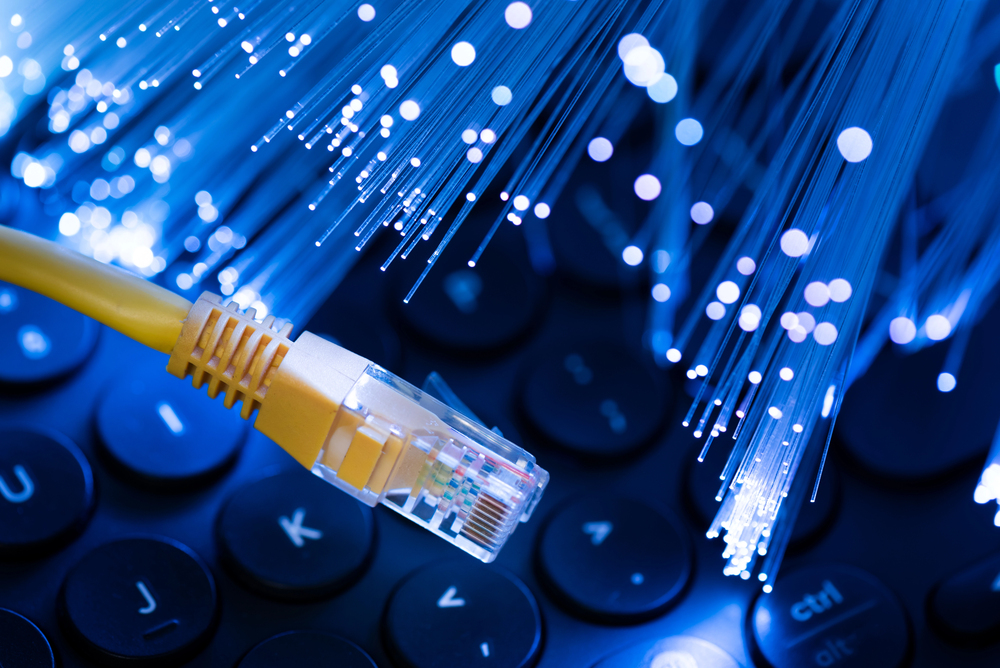
Choosing the right network cabling can have a lasting impact on how efficiently a business operates. When comparing fiber optic vs Ethernet, there isn’t a single solution that’s best for every organization. Facility size, bandwidth requirements, connected devices, distance, and future growth all play a role in determining the right infrastructure. At ADD Communications, we help businesses evaluate these factors and build networks designed around their specific needs. If you’re planning a new network or considering an upgrade, call us at 336-317-4658 to discuss your options.
Understanding Fiber Optic and Ethernet Cabling
Before deciding which option is best for your business, it helps to understand how fiber and Ethernet differ. Both can play important roles in a modern business network, but each offers distinct advantages depending on the application.
What Is Fiber Optic Cabling?
Fiber optic cabling transmits data using pulses of light through thin strands of glass or plastic rather than electrical signals traveling through copper. This technology allows fiber to carry large amounts of data at high speeds over significant distances.
A fiber optic network for business can be especially valuable for organizations with demanding bandwidth requirements, large facilities, multiple buildings, or plans for continued technology growth. Fiber can serve as the high-capacity backbone that keeps different areas of a network connected efficiently.
What Is Ethernet Cabling?
Ethernet commonly uses copper twisted-pair cabling to connect devices throughout a business network. Workstations, printers, VoIP phones, wireless access points, security devices, and other equipment can all rely on Ethernet connections.
Ethernet cabling for business remains a practical option for many everyday network connections. It is particularly useful for shorter runs to individual devices and applications that benefit from Power over Ethernet (PoE), which can deliver both data and electrical power through compatible cabling.
Fiber Optic vs. Ethernet: Key Differences for Businesses
The right commercial network cabling isn’t determined by a single feature. We look at the entire network environment and consider how different cabling options will support both current operations and future needs.
1. Speed and Bandwidth
Fiber optic cabling is designed to handle very high data capacity, making it well suited for network backbones and bandwidth-intensive environments. This can become increasingly important as businesses depend on cloud applications, video conferencing, large data transfers, connected technology, and other digital tools.
Modern Ethernet can also provide strong performance for many business applications. The question is whether the cabling infrastructure can support the organization’s current bandwidth requirements while leaving enough room for future growth.
2. Distance
Distance is another important consideration in a fiber optic vs Ethernet cable comparison. Copper Ethernet has distance limitations, while fiber can transmit data across substantially longer distances without the same signal degradation concerns.
That makes fiber particularly useful in large facilities, warehouses, campuses, and properties where network connections must extend between buildings or distant areas.
3. Reliability and Interference
Because fiber transmits information using light rather than electrical signals, it is resistant to electromagnetic interference. This can be an advantage in environments where electrical equipment or other sources of interference could affect copper network cabling.
Both fiber and Ethernet can provide reliable connectivity when they are properly selected and professionally installed. We consider the conditions within the facility when determining which cabling makes the most sense for each part of the network.
4. Installation and Cost
Cost is naturally an important part of any infrastructure project, but we encourage businesses to look beyond the initial installation price. The right choice should account for performance requirements, facility layout, expected lifespan, maintenance, and potential future upgrades.
In some situations, Ethernet may provide a practical and cost-effective solution. In others, investing in fiber now may help a business avoid having to replace inadequate infrastructure as its network demands increase.
5. Scalability
Technology needs rarely stay the same. Businesses add employees, devices, cloud services, communication platforms, security systems, and other connected technologies over time.
Planning a scalable business network infrastructure helps ensure the cabling installed today can support tomorrow’s needs. Fiber’s high bandwidth capabilities make it a strong option for organizations anticipating significant growth, while Ethernet can continue to serve many device-level connections effectively.
Fiber Optic vs. Copper Cable: When Does Fiber Make More Sense?
When comparing fiber optic vs copper cable, fiber often makes sense when distance, bandwidth, scalability, or environmental conditions are major considerations.
We may recommend fiber for applications such as:
- Network backbones
- Large commercial facilities
- Connections between separate buildings
- Warehouses and industrial environments
- Campuses with multiple facilities
- High-bandwidth business operations
- Organizations preparing for significant network growth
Fiber can also be an effective choice when a business wants to invest in infrastructure that can accommodate increasing technology demands over the long term.
When Does Ethernet Make More Sense?
Fiber isn’t necessary for every connection within a business. Ethernet remains a valuable part of commercial networking and may make more sense for shorter runs and connections to individual devices.
Ethernet can be an effective solution for:
- Desktop computers and workstations
- VoIP phones
- Wireless access points
- Printers and other network devices
- Security cameras and compatible PoE devices
- Shorter network runs
- Offices with moderate bandwidth requirements
If an existing Ethernet network is performing well and meets current requirements, replacing every connection with fiber may not provide a meaningful benefit. Our goal is to recommend infrastructure based on what the business actually needs.
Can Businesses Use Fiber Optic and Ethernet Together?
Yes. In many cases, the best answer isn’t choosing one technology over the other. Fiber and Ethernet can complement each other within the same network.
For example, we may use fiber optic cabling as a backbone to carry high volumes of data between network rooms, floors, or separate buildings. Ethernet can then provide the connections from network equipment to individual devices.
This hybrid approach allows businesses to take advantage of fiber’s distance and bandwidth capabilities while retaining the practicality of Ethernet for everyday device connections. Designing the network as a complete system helps us determine where each type of cabling provides the most value.
How to Decide Which Cabling Is Right for Your Business
Every facility and network is different. Before making a recommendation, we consider how the network is used today and how those needs could change in the future.
Some of the factors businesses should evaluate include:
- Facility size and layout
- Distance between network connections
- Current bandwidth requirements
- Number and type of connected devices
- Expected business growth
- Cloud application usage
- VoIP and audiovisual requirements
- Wi-Fi infrastructure
- Existing cabling conditions
- Plans for future expansion
- Budget and long-term infrastructure goals
Looking at these factors together can help prevent businesses from installing a network that works today but quickly becomes a limitation.
Why Choose ADD Communications for Your Network Cabling?
At ADD Communications, we understand that network infrastructure isn’t a one-size-fits-all investment. We work with businesses to understand their facilities, technology requirements, operational needs, and future plans before determining the appropriate solution.
Our experience goes beyond fiber installation. We provide services that can work together as part of a complete communications and technology infrastructure, including fiber optic services, network infrastructure, commercial cabling, VoIP phone systems, and audio/visual installation.
This broad range of capabilities allows us to consider how different technologies interact rather than looking at cabling in isolation. Whether we’re helping with a new facility, an expansion, or an upgrade to existing infrastructure, our focus is on building a reliable network suited to the way the business operates.
Frequently Asked Questions About Fiber Optic vs. Ethernet
Understanding the differences between these cabling options can help businesses make more informed infrastructure decisions. Here are answers to a few common questions we hear. If you’d like personalized guidance for your network, call ADD Communications at 336-317-4658 to speak with our team.
Is fiber optic faster than Ethernet?
Fiber is capable of supporting extremely high speeds and bandwidth, which makes it particularly useful for demanding network environments and backbone connections. However, the performance a business actually needs depends on its equipment, applications, network design, and usage.
Is fiber optic better for large commercial buildings?
Fiber can be an excellent choice for large facilities because it can transmit data over longer distances and provide significant bandwidth. It can also be used to connect network rooms, floors, buildings, or other areas across a large property.
Is Ethernet still a good choice for business networks?
Yes. Ethernet remains useful for many business applications, particularly connections to individual devices. The best network may incorporate both Ethernet and fiber based on where each technology is most appropriate.
Can fiber optic and Ethernet be used in the same network?
Absolutely. Many networks use fiber for backbone or long-distance connections and Ethernet for shorter connections to workstations, phones, access points, cameras, and other devices.
How do I know if my business should upgrade to fiber optic cabling?
An upgrade may be worth considering if your current infrastructure is struggling with bandwidth demands, you’re expanding your facility, you need to connect distant areas, or you’re planning for significant future technology growth. A professional assessment can help identify whether fiber would provide a meaningful improvement.
Build the Right Network Infrastructure for Your Business
When evaluating fiber optic vs Ethernet, the right answer depends on how your business uses its network and what you’ll need from that infrastructure in the years ahead. Fiber offers significant advantages for bandwidth, distance, and scalability, while Ethernet remains a practical choice for many everyday network connections. In many cases, using both can provide an effective solution.
At ADD Communications, we can evaluate your existing infrastructure, facility requirements, and future plans to help determine the right approach. Whether you’re considering fiber, Ethernet, or a combination of both, call us at 336-317-4658 to discuss a network cabling solution designed for your business.